

Tell us immediately if you find sea spurge
Sea spurge is an unwanted organism under the Biosecurity Act (1993). You must not propagate, spread, display, or sell the plant.
If you think you’ve found sea spurge:
- freephone our pest and disease hotline on 0800 809 966 or make an online report
- don't touch the plants or try to remove them
- record the location and take photos so we can find the plants
- leave the plants so they can be treated or removed safely without the risk of them being spread further.
About sea spurge
Sea spurge (Euphorbia paralias) is a small, long-lived herbaceous plant native to Europe, Northern Africa, and Western Asia.
Sea spurge is likely to have arrived in New Zealand on ocean currents from Australia, where it is a major weed on their southern coast.
Identifying features of sea spurge
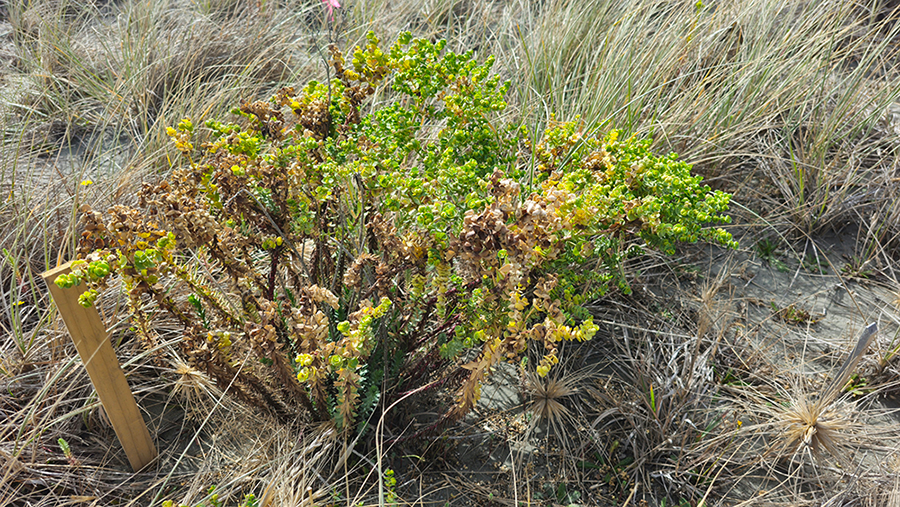
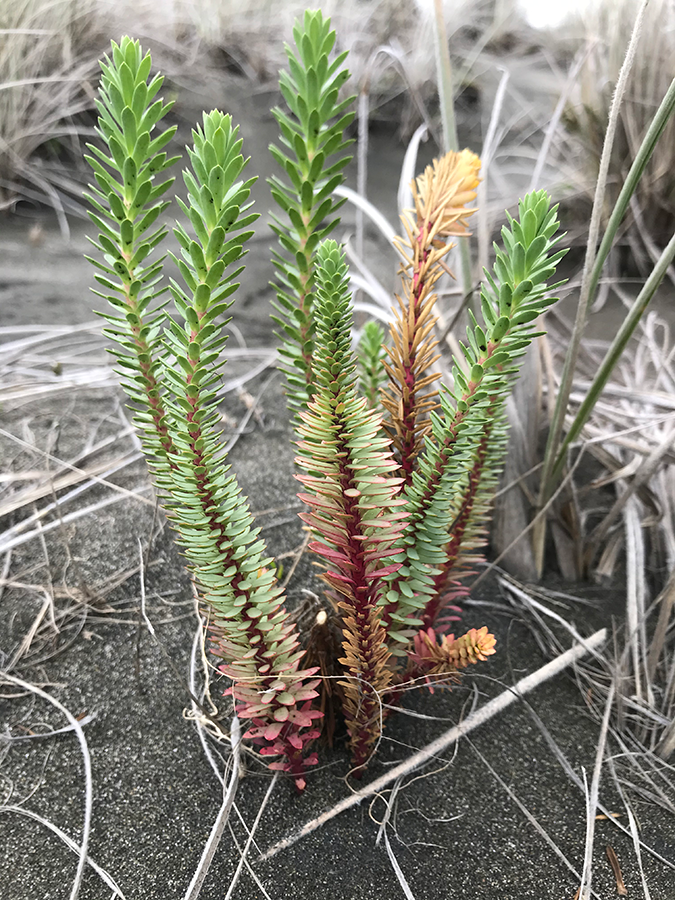
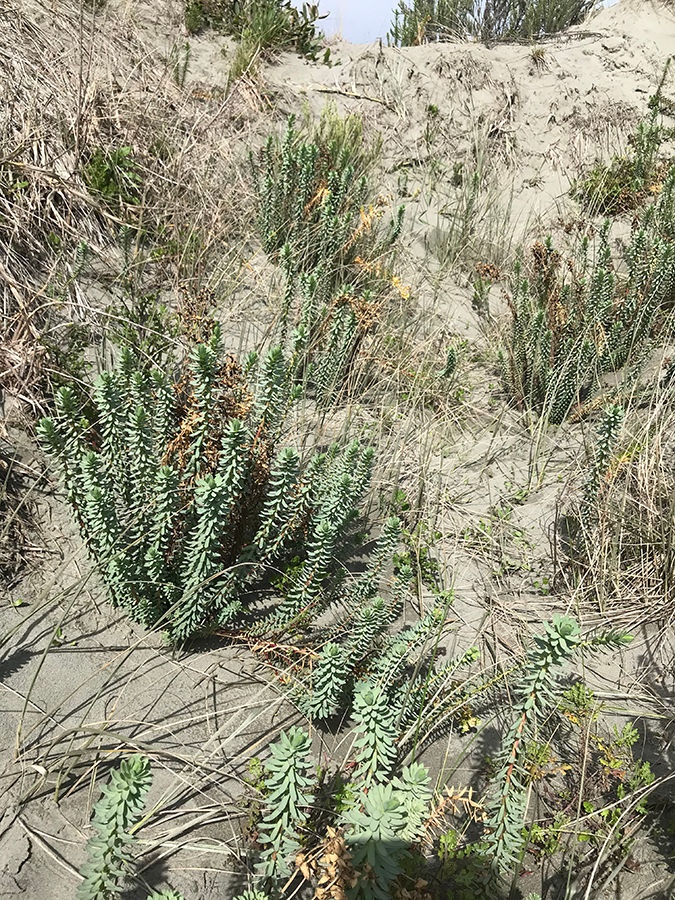
Sea spurge produces many stems that usually grow between 20 cm and 70 cm tall but can reach up to a metre high. It has tightly packed bluish-green leaves (5 mm to 30 mm long and 2 mm to 15 mm wide). The stem often has a red tinge at the base. Do not touch it, as it has a milky sap, which is toxic to people and animals and may cause temporary blindness.
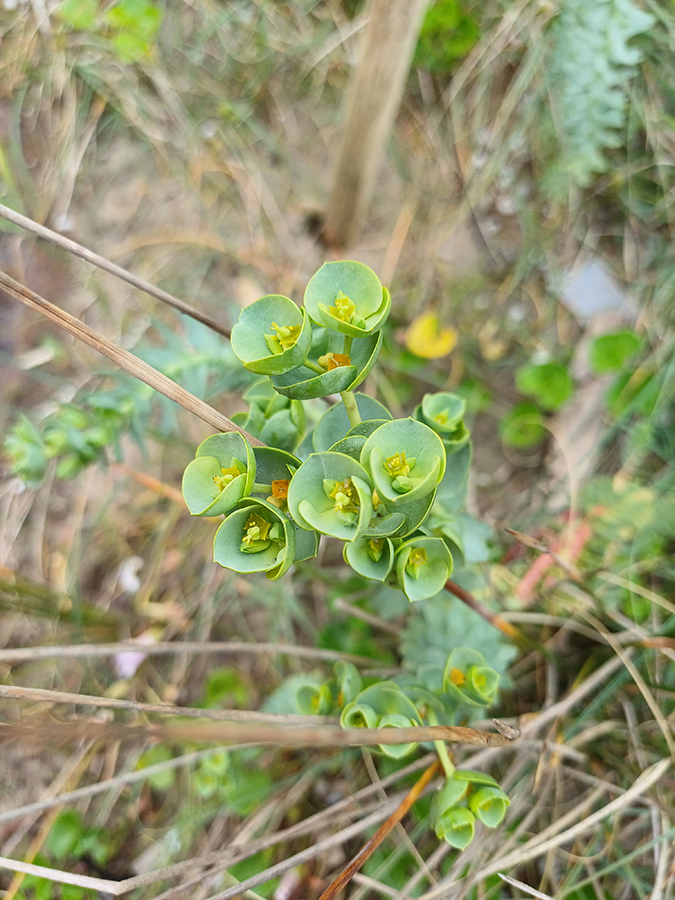
Sea spurge can flower year-round in New Zealand. Its flowers are yellowish green, without petals, and found in clusters near the tips of the stems.
Sea spurge can look very similar to our native spurge – waiūatua / waiū-o-Kahukura (Euphorbia glauca) – but the native spurge has much larger leaves (30 mm to 80 mm long) and has red or pinkish flowers.
How to identify sea spurge [PDF, 1.4 MB]
Find out more about Euphorbia glauca – New Zealand Plant Conservation Network
What sea spurge looks like
Why we don’t want sea spurge in New Zealand
Sea spurge is a very invasive species that quickly forms large and dense populations, replacing native species and taking over the coast. An adult plant can produce over 5,000 buoyant and salt-tolerant seeds every year. These seeds can survive for up to 6 years in seawater, allowing long-distance movement on ocean currents.
Large sea spurge populations:
- cause significant damage to coastal ecosystems
- change natural patterns of sand movement
- threaten the habitats of native shorebirds.
Sea spurge is also poisonous: the milky sap in its stems is toxic to people and animals. The sap causes painful eye irritation and can cause temporary blindness.
Where sea spurge has been found in NZ
Sea spurge has been found all along the west coast of the North Island, from Wellington to Northland. It has also been found at Kapowairua (Spirits Bay) on the north coast and near Karamea on the West Coast of the South Island.
All of New Zealand’s coastline is potentially suitable habitat for sea spurge, which is why it is important to keep an eye out for it.
We want to get rid of sea spurge
Biosecurity New Zealand started the Sea Spurge Programme in 2021 to provide long-term surveillance and control of the invasive plant. Our vision is that Aotearoa New Zealand is free from sea spurge (Euphorbia paralias).
To achieve this, we work in partnership with the Department of Conservation, regional councils, iwi, and hapū.
All known sea spurge sites are regularly inspected, and we remove all sea spurge plants found. Once sea spurge can no longer be found at these locations, we continue to check for at least 10 years to ensure no viable plant material remains.
The programme regularly searches priority areas of New Zealand’s western coastline to find any new sea spurge populations.
Sea spurge fact sheet [PDF, 978 KB]
Other sea spurge images

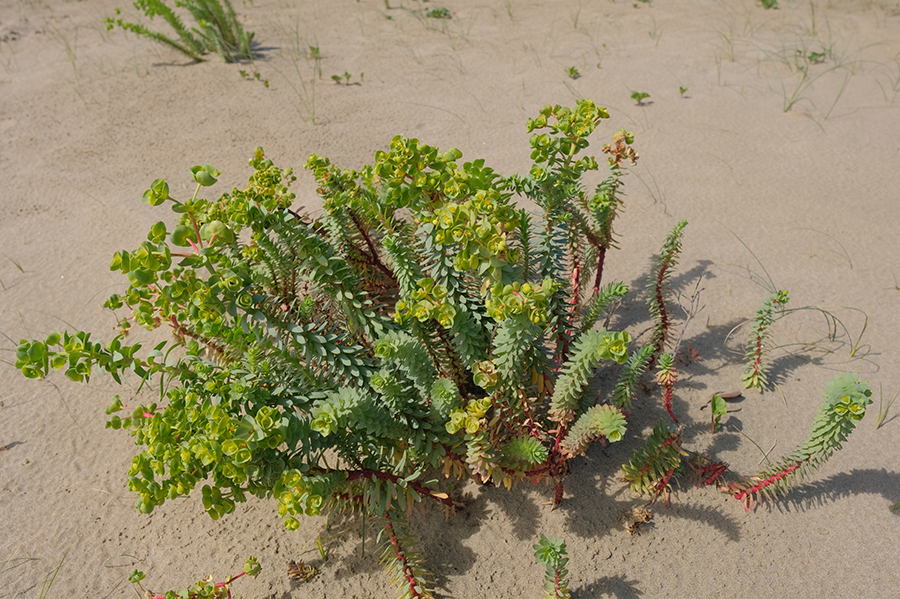
(Credit: Frances Velvin, MPI)

(Credit: Ben Faircloth, MPI)