For individuals
Mā te takitahi


Don't spread invasive freshwater clams. 'Check Clean Dry' your boat and gear every time you move between waterways.
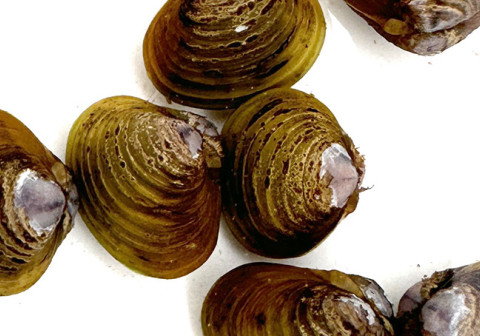
The invasive freshwater clam can be as small as a grain of sand. They can attach to surfaces like boats, wetsuits, and other gear. Because they can be invisible to the naked eye, they can be moved between waterways undetected.
If you’ve been in a lake, river, stream, or wetland and plan to visit another waterway, 'Check Clean Dry' your boat and gear before you move.
The 'Check Clean Dry' process has existed for more than 20 years in New Zealand to help prevent the spread of freshwater weeds and pests. Based on recent scientific research, there are new 'Clean' treatment options for absorbent gear. These research-backed options sit alongside existing treatments such as hot water and freezing, giving water users more flexibility to choose a method that works for them.
The new treatments include soaking absorbent gear in:
Transcript – show/hide
[ Footage of people enjoying water activities: A boat on the lake, people kayaking on a river, people fishing in a lake, people rafting in a river, kids swimming in a lake, a woman paddling on a lake.]
[Dr Tracey Burton, Manager Biosecurity and Biodiversity, Toitu Te Whenua – Land Information New Zealand, is sitting near a lake and talks to the camera.]
Dr Tracey Burton: Like many New Zealanders, I enjoy spending time around our lakes and rivers and feel a real connection to them.
[2 divers are in a lake with a notepad doing dive surveys.]
Dr Tracey Burton: For 20 years I was a freshwater ecologist carrying out dive surveys looking below the surface of the water.
[Footage of underwater meadows, kākahi and koura.]
Dr Tracey Burton: And in many of our New Zealand lakes, we have these beautiful underwater gardens, diverse communities of plants that grow right across the lake bottom and support a diverse range of other species. And this includes our taonga species such as our freshwater mussel, the kākahi, and the freshwater crayfish, the koura.
[Underwater footage of dirty water full of pest weeds.]
Dr Tracey Burton: But many of our rivers and lakes are now under attack from invasive weeds and pest species.
These species are destroying underwater ecosystems and threatening the mauri, the life force, and health of these rivers and lakes.
[Dr Tracey Burton is talking to camera.]
Dr Tracey Burton: By healthy, we mean a water body that's unimpacted by weeds and pests and supports a diverse range of life. A system that has good water quality and can support a healthy food web for the other species that live in these systems.
[Footage of an aerial view of a lake, then of a bird looking for food in a lake and of kōkopu. Diverse videos of people enjoying water activities like biscuiting, boating and fishing, then irrigation in a field and a hydro-power plant.]
Dr Tracey Burton: New Zealand has a diverse range of native plants, fish and invertebrates and birds that depend on these freshwater environments. And many of these species are endemic, found nowhere else in the world like the giant kōkopu. We also enjoy healthy water for swimming, for boating, for fishing and for the scenery. And water is also used for drinking and irrigation and power generation.
[Dr Tracey Burton is talking to camera. The 'Check, Clean, Dry' logo appears.]
Dr Tracey Burton: Understanding the threat of these invasive species helps us to see why it's so important to check, clean and dry our gear before we move between waterways.
[Underwater footage of each pest is shown as Dr Tracey Burton describes it.]
Dr Tracey Burton: Hornwort is New Zealand's worst submerged weed species. So, it can grow up to 8 metres tall. That's taller than a house and can form these large, dense floating nets on the surface of lakes. In river systems, these can roll down the system, causing real havoc to recreational activities.
Fortunately, this weed is only known to be in the North Island. Other weed species, including egeria and lagarosiphon, this is the one with the curly leaves, that are also having a big impact. These weed species have come into New Zealand with no competition. They grow faster and taller than any of our native species. And they are known as space invaders. When they come into a lake system, they simply take it over. They smother out the native plants and destroy habitats. You've probably heard of the alga didymo, or rock snot, that forms these brown, slimy masses on rocks and plants in southern rivers and lakes. More recently, we've been seeing the spread of another algae called lindavia, which produces a mass of sticky mucus strands in our lakes. Invasive pest fish are also causing havoc, like the catfish and the koi carp that feed by hoovering off the bottom, creating a real mess, stirring up the sediments and creating really bad water quality.
[Dr Tracey Burton is talking to camera.]
Dr Tracey Burton: Once established, invasive species are difficult, if not impossible, to remove and can change our lake and river systems forever.
Prevention remains our best line of defence. And the common factor for the spread of these invasive species is people. It's us moving these species around.
[Message on the screen: Helps protect your lakes and rivers]
[The 'Check, Clean, Dry' logo appears, and an acknowledgement to Dr Tracey Burton and NIWA. The logos for Biosecurity New Zealand and Ko Tātou/This Is Us appear at the bottom of the screen.]
[End of transcript]
The invasive freshwater clam is known to be present from Lake Maraetai Landing to Tuakau. There is a Controlled Area Notice in place that must be followed for all water users on this section of the Waikato River.
Waikato River Controlled Area Notice
Bay of Plenty’s Te Arawa lakes also have a Controlled Area Notice in place. And there are extra protections for Lake Ōkataina.
Te Arawa Lakes Controlled Area Notice
In Taranaki, the invasive clam was found at Lake Rotomanu on 8 November 2025. Check the Taranaki Regional Council's website to keep up to date with developments.
Council news – Taranaki Regional Council
During feeding, invasive clams soak up harmful toxins that can make people sick. For this reason, they are not safe to eat.
It is also illegal (under the Biosecurity Act 1996) to knowingly move the clams or water that may contain them.
MPI uses cookies to improve your experience on our site. By using our website, you accept our use of cookies.