New Zealand's largest fishery is hoki
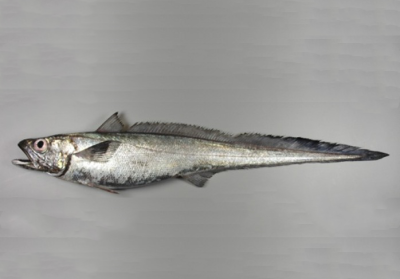
Hoki (Macruronus novaezelandiae) are widely distributed throughout New Zealand waters from depths of 10 metres to over 900 metres, with the greatest abundance between 200 metres and 600 metres.
Hoki spawn from late June to mid-September, primarily on the west coast of the South Island (Hokitika Canyon), Cook Strait and in Pegasus Canyon, with smaller amounts of spawning found in the Puysegur area.
Hoki grow to a maximum size of 130cm and maximum age of 20 to 25 years. They reach maturity between 3 and 5 years of age. The age of the commercial catch varies among areas, but most fish caught are between 3 and 12 years old.
The hoki fishery operates throughout the year and includes both spawning and non-spawning fisheries. In 2023-24 the overall hoki catch was 107,054 tonnes of which 42,567 tonnes (40%) was taken from the western fishery.
History of the hoki stock
The New Zealand hoki Quota Management Area (HOK 1) covers all New Zealand Exclusive Economic Zone waters except the Kermadecs and is managed to a target biomass range of 35% to 50% of the unfished mature biomass (SSB0). Stock status is assessed annually assuming 2 separate but interlinked stocks, eastern and western, with separate catch limits set for each stock through a voluntary catch split arrangement.
Both Fisheries New Zealand and hoki quota owners were aware that the western hoki stock had declined somewhat in the late 2010s. The reasons are unknown, but a similar although more extreme scenario happened in the early 2000s – which no-one wants to repeat.
The 2025 stock assessment estimated the biomass of the eastern stock to be around the upper bound of the management target range at 55% SSB0, whereas the biomass of the western stock was estimated to be at 39% SSB0, similar to 2023, up from 28% SSB0 in 2022 and above the lower bound of the management target range. Five-year projections using the 2024-25 catch limits estimated that both stocks would remain fairly constant over the next 5 years, assuming recent recruitment levels.
Management measures for hoki
In response to previous stock assessment results, and following public consultation, catch limit reductions were made in both 2019 and 2021. These changes reduced the western catch limit by 45,000 tonnes, to 45,000 tonnes, and increased the eastern catch limit by 5,000 tonnes, to 65,000 tonnes, resulting in an overall catch limit reduction of 40,000 tonnes.
Hoki quota owners had been concerned about potential declines in the western hoki in previous years and so voluntarily agreed to shelve quota (forego catch) even prior to the official TACC changes in 2019 and 2021.
There is no industry shelving for the current fishing year, which aligns with both the eastern and western stocks currently being within or above the management target range.
These measures have been developed to ensure that the stocks remain in good health and do not decline below the target range. In addition to the annual stock assessment and area catch limits, hoki are also managed using voluntary Hoki Operational Procedures. These consist of:
- Hoki Management Areas where vessel operators have agreed not to target hoki with vessels over 28 metres within 4 areas where there is relatively high abundance of small hoki.
The way forward for hoki
The next stock assessment for hoki is scheduled for 2027. The assessments routinely include research trawl survey information from the Chatham Rise and Sub-Antarctic and acoustic estimates from Cook Strait and the west coast of the South Island, as well as catch data and extensive length and age data.
The 2027 assessment will provide updated information on the status of the stock, which will inform consideration of any further amendments to the management settings required to manage the population within the management target range.