
Wild browsers and production land
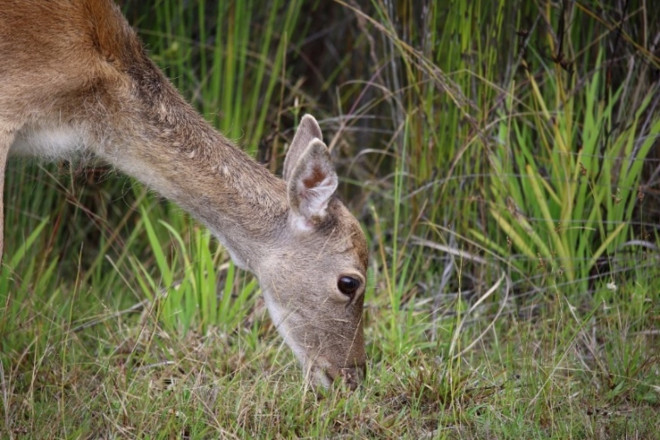
Wild (feral) browsing animals are causing increasing damage and costs for farmers, foresters, and growers.
The animals cause damage to:
- pasture and crops
- native vegetation
- fences and riparian plantings
- young farm forestry trees
- on-farm biodiversity.
They cause reduced productivity in production forests and increased erosion, poorer water quality, and sedimentation. Wild browsing animals can also spread infectious diseases.
Farmers, growers, and producers also have increased costs for pest management activities.
About the feral browsing animals programme
The programme supports landowners to reduce the impacts of wild animals on production land. It supports a coordinated approach to managing feral browsing animals across New Zealand. It complements the work of the Department of Conservation (DOC), regional councils, and others.
The initial focus is on wild deer but the programme may expand to other species over time.
Catchment group pilots
An aim of the programme is to help communities improve feral animal management. Catchment groups are a good place to start because they already bring landowners together to work collaboratively on local issues.
Three catchment pilots are underway (each with $250,000 of funding from MPI) to support locally led development of coordinated deer management plans for production land.
The projects involve the Hurunui District Landcare Group, Wairarapa Catchment Collective, and Rangitīkei River Catchment Collective. The pilots are expected to run until August 2027.
Government media release about the pilots
Government backs wild deer control pilots – Beehive
The benefits of working together
Pest management is most effective when action is coordinated across farms, forests, neighbouring properties, and regions. Working together delivers stronger, faster and more cost-effective results.
Benefits include:
- Improved production and productivity: Reducing browsing pressure on pasture, crops, riparian planting and forests can avoid production impacts and losses and profitability impacts. It can also reduce fencing and pest control costs.
- Enhanced biosecurity: Managing feral browsing animals reduces the risk of spreading diseases such as bovine TB.
- Protection of the environment: Feral browsing animals damage production land, ecosystems and biodiversity initiatives. Managing their numbers helps protect these values.
- Stronger collaboration: Working together creates a more coordinated response to shared challenges.
Reduced impacts of feral browsing animals on production land will show that coordinated management is working.
Developing a national framework for managing introduced wild animals
Introduced wild animals are increasingly impacting New Zealand's environment and economy. They are undermining farmers and growers' productivity and affecting biodiversity, including in our native forests. However, they are also highly valued for hunting by many communities for recreational, cultural, and commercial reasons.
MPI and DOC are working together to develop a national framework for managing introduced wild animals. The framework will help align management approaches across the country while recognising that these need to be tailored to local circumstances, values and outcomes. It will support better outcomes for biodiversity, farming and production land, hunters and communities. The framework will have an initial focus on wild deer.
Development of the framework is being informed through engagement with partners from the conservation, hunting, land management and primary production sectors. An initial framework is expected to be completed in 2027.
For more information about this national framework, email DOC at wildanimalmanagement@doc.govt.nz
Resources
Pest animal control for forests – Canopy
Hunters are advised to read the 2026 amendment to Section 37 of the Health and Safety at Work Act to be completely familiar with land access legislation and hunter responsibilities.
Section 37 of the Health and Safety at Work Act – NZ Legislation
Organisations involved in the programme
Led by the Ministry for Primary Industries (MPI), the programme brings together government, industry and organisations, including:
- Beef + Lamb New Zealand
- Climate Forestry Association
- Deer Industry New Zealand
- Department of Conservation
- Federated Farmers of New Zealand
- Forest & Bird New Zealand
- New Zealand Deerstalkers Association
- New Zealand Forest Owners Association
- New Zealand Game Animal Council
- Te Uru Kahika (New Zealand’s regional and unitary councils collective).
How to contact us
For more information about MPI's Feral Browsing Animals Programme, email info@mpi.govt.nz