

Tell us immediately if you find Manchurian wild rice
Manchurian wild rice is an unwanted organism under the Biosecurity Act (1993). You must not propagate, spread, display, or sell the plant. It is also a notifiable organism, which means you must report all sightings to the Ministry for Primary Industries.
If you think you’ve found Manchurian wild rice:
- freephone our pest and disease hotline on 0800 809 966 or make an online report
- don't touch the plants or try to remove them.
- take photos and leave the plants so they can be treated or removed safely without spreading the pest further.
About Manchurian wild rice
Manchurian wild rice is a giant, perennial grass from Eastern Asia which produces rhizomes (underground root-like stems) and grows up to four metres tall.
Identifying features of Manchurian wild rice
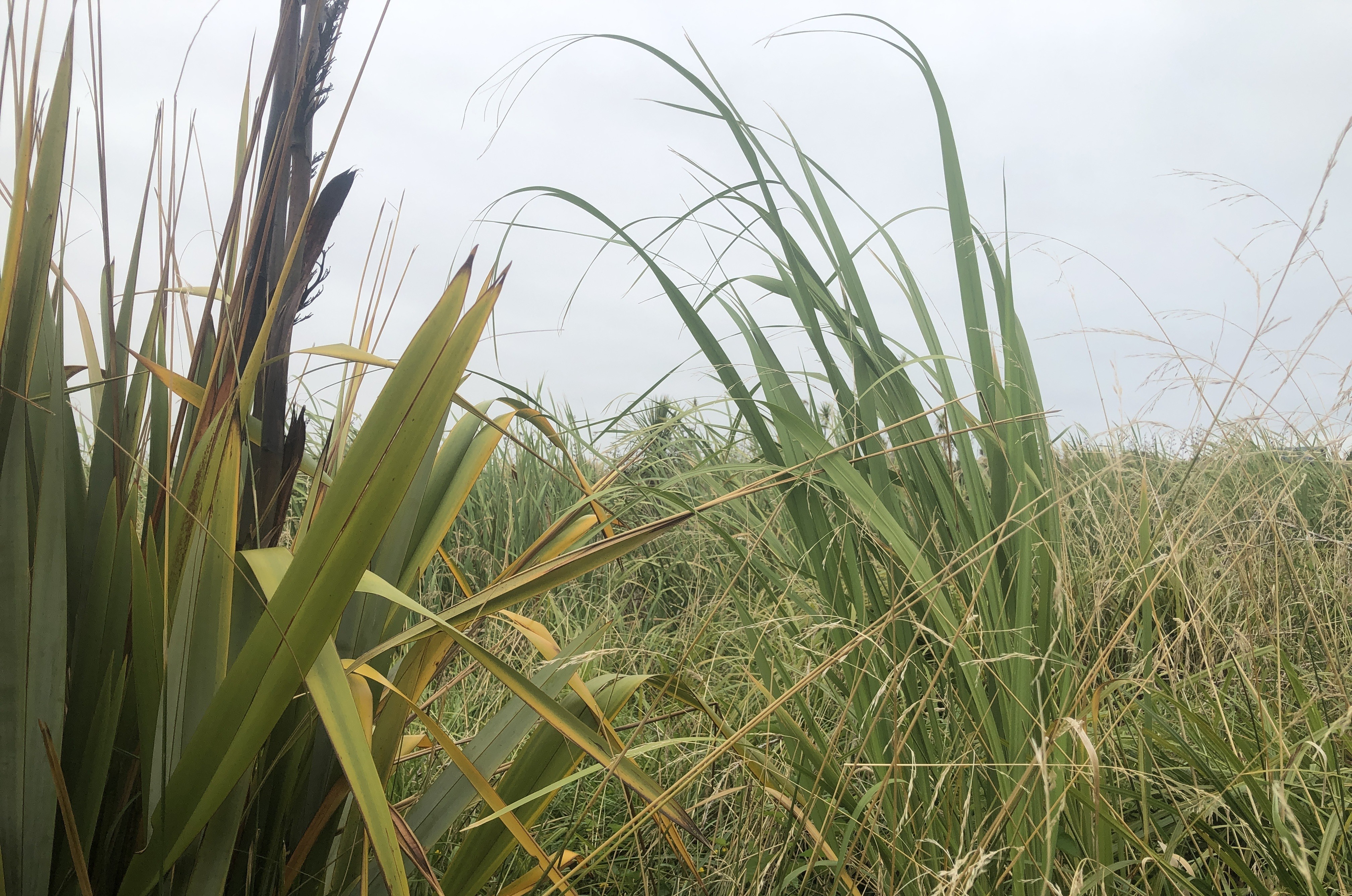
- Tall, grass like plant (up to four metres tall).
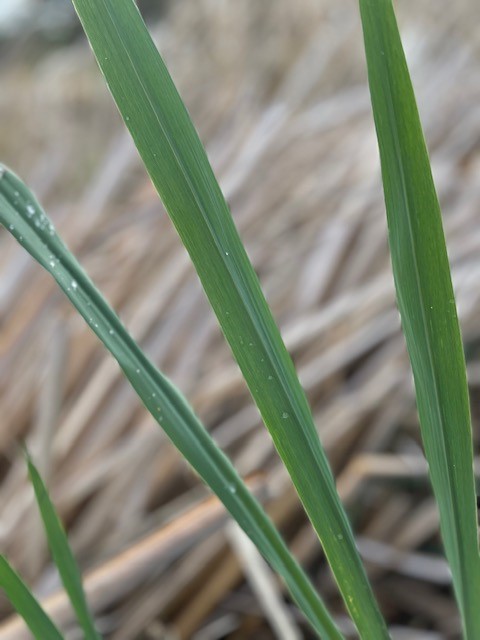
- Long, straight and dull-grey green leaves (2–3cm wide, up to 2.5m long).
- A distinct central mid rib that tapers to a point.
- Leaves stays green through winter.
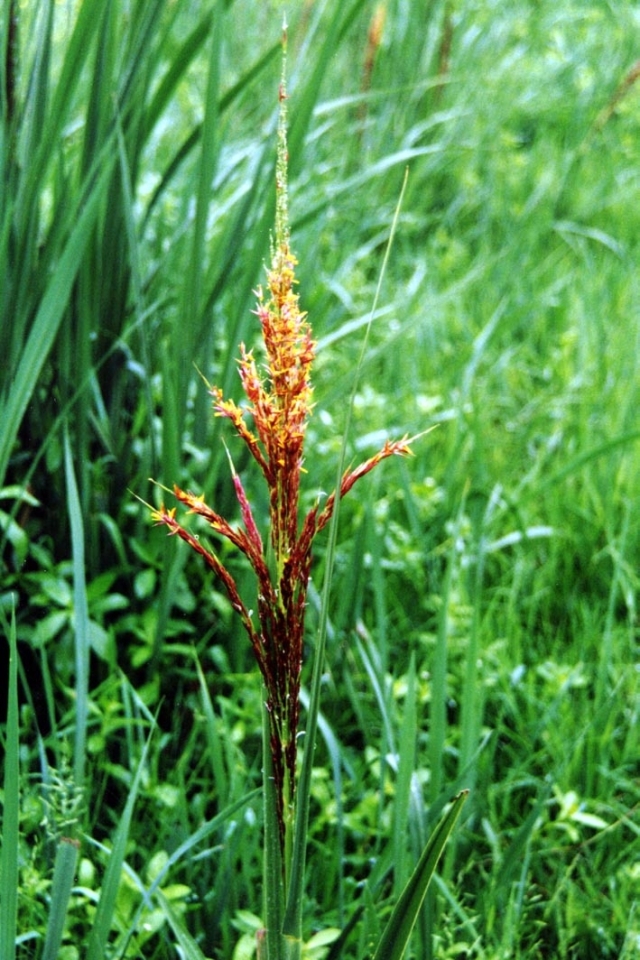
- From November to December, a purplish or red-brown flower head (40 cm to 60 cm long) is produced.
- Looks similar to raupō and harakeke (flax), but raupō dies back and does not stay green over winter or have an obvious midrib, and harakeke has much wider, thicker and shinier leaves.
Why we don't want Manchurian wild rice in New Zealand
Manchurian wild rice is a highly invasive grass that forms dense, long-lived stands on land and water margins, overtopping other river-bank species. It can quickly take over wetlands, riverbanks, and other natural areas – pushing out native plants, damaging ecosystems and increasing flooding risk. It was accidentally introduced in soil contaminated with seed (used as ballast in arriving ships) to the Northern Wairoa River around 1900.
Land can become more flood-prone where Manchurian wild rice has established. The extensive rhizome system penetrates and damages stop-banks and thick stands block irrigation and drainage channels. This pest plant also displaces pasture grasses on low-lying land, reducing productivity.
Where Manchurian wild rice has been found in NZ
Manchurian wild rice is only known to occur in the Northland, Auckland, Waikato, and Greater Wellington regions. It grows in areas next to rivers, lakes, and drains, in wetlands and on low-lying farmland.
It has been sold at plant sales and market stalls, and so if you are buying, trading, or sharing other plants, please keep an eye out.
Manchurian wild rice control and eradication
Manchurian wild rice is one of the species being eradicated through the National Interest Pest Responses programme. The programme is focused on elimination from the Auckland, Waikato, and Greater Wellington regions. In Northland, where infestations cover about 500 hectares, the aim is to keep infestations around the northern Wairoa River (the Containment Zone) from spreading further and eliminate all populations outside of this zone. We are also looking into new tools to control the heaviest infestations in the Containment Zone so that we can completely eradicate Manchurian wild rice from New Zealand in the long-term.
Infestations are regularly sprayed with herbicides until no further regrowth occurs, which can take several years to achieve. We are also trialling excavation to aid in the elimination programme. A site can be declared free of this pest after 10 consecutive years with no regrowth.
Biosecurity New Zealand works closely with the regional councils and other organisations to eradicate Manchurian wild rice from New Zealand.
Manchurian wild rice – we need your help! (English and simplified Chinese) [PDF, 2.4 MB]